What I built, what broke, and what I measured.
2026
-
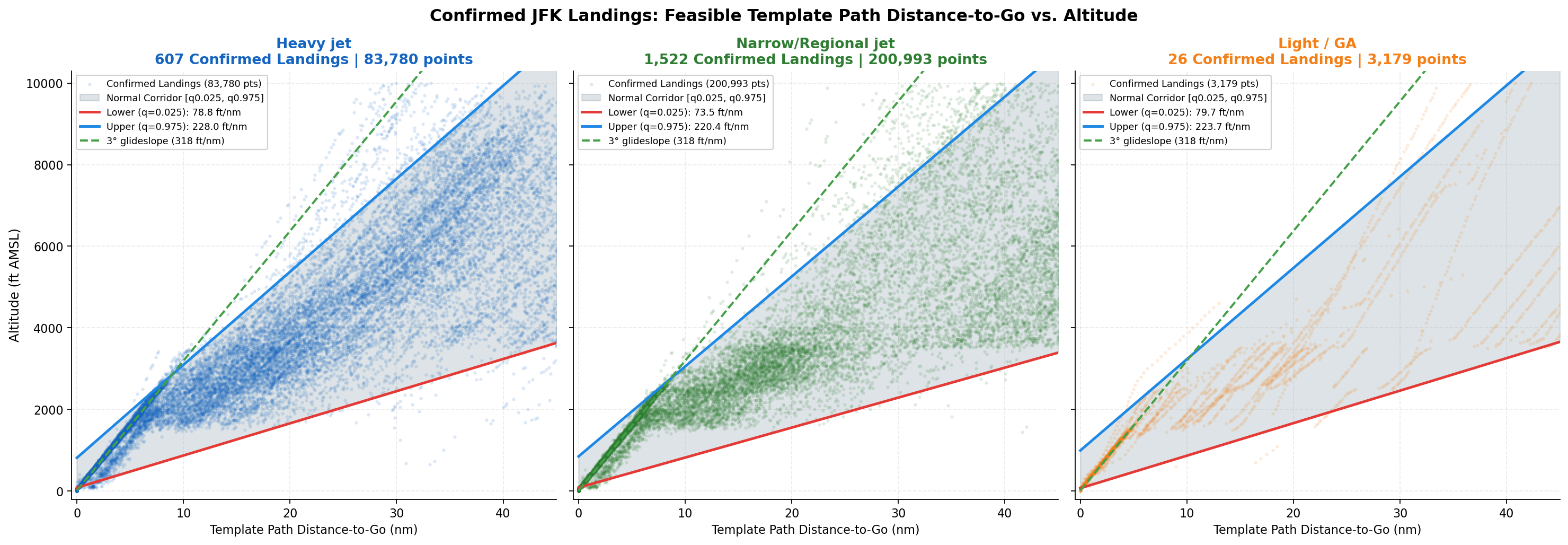
Physical feasibility and approach corridors
Why radial distance fails, evaluating the physical feasibility of template paths and bounding approach descent with quantile regression corridors.
-
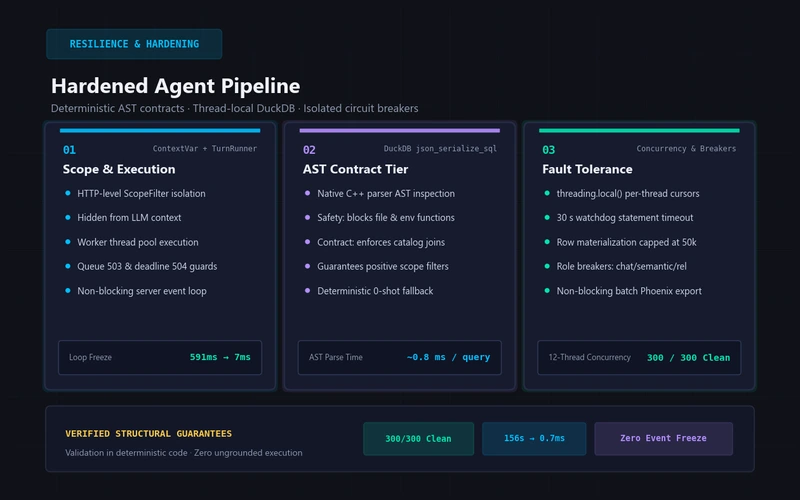
Hardening the house-hunting agent: contracts, concurrency, and resilience
Regex validation, shared database connections, and prompt-based scoping gave a false sense of security. AST contracts, per-thread cursors, ContextVar scoping, and isolated circuit breakers make the house-hunting agent resilient under pressure.
-
Disaggregation - from flight-path templates to individual flights
Individual-flight animation and manual phase labels expose differences hidden by aggregated route views.
-
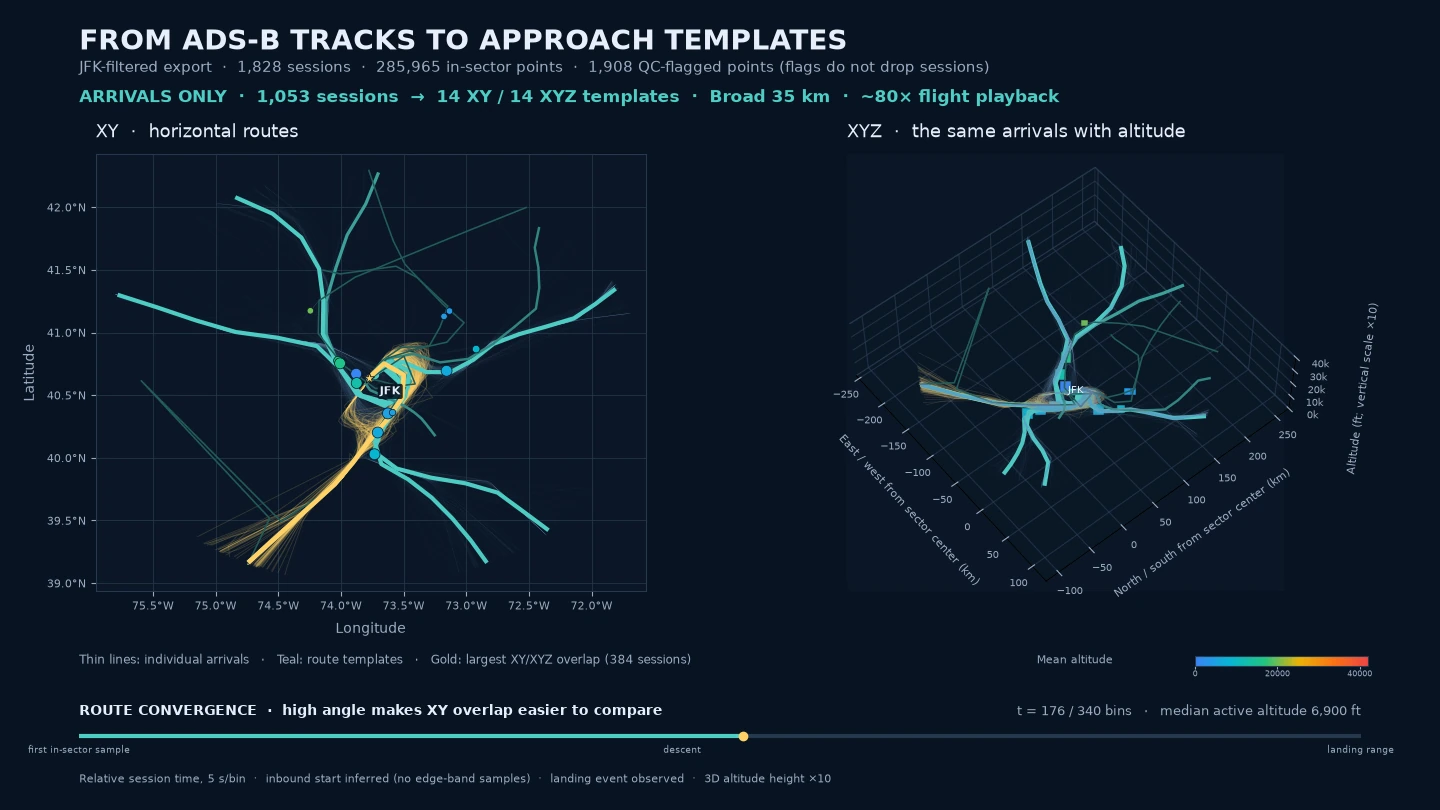
Air traffic control (ATC) is like highway management
Track-quality flags, explicit S1-S4 session checks, and paired XY/XYZ route views extend FlightPathAnalysis from preprocessing into trajectory analysis.
-

Teaching an RL agent to play NES Tennis - a work in progress
A custom ROM patcher makes NES Tennis actually trainable. The RL model is not working: early policies refused to serve because that turned out to be the safest strategy. Using an LLM instead would only make things worse.
-
From catalog to a true ‘blank canvas’: user defines the flow
Map layers are built from the catalog, crime density plays back year by year, and answers arrive as tables, charts and maps instead of walls of text. Also adds Zillow-based valuation.
-
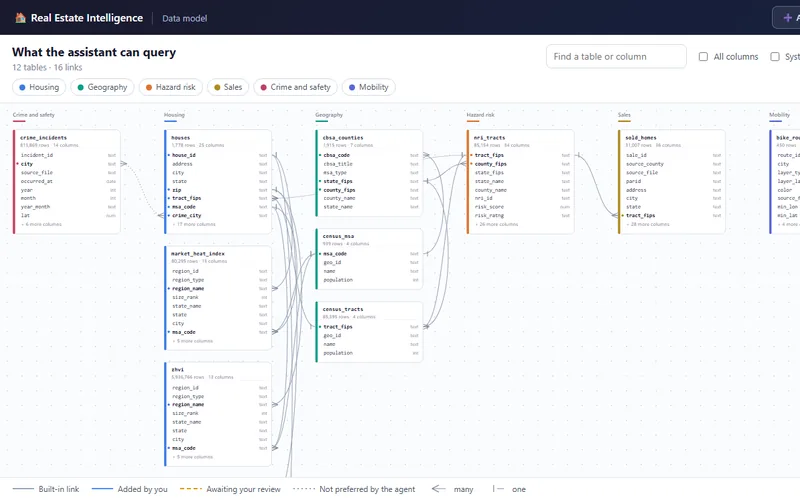
A living catalog and self-serve data onboarding for the house-hunting agent
New datasets are onboarded through a catalog in DuckDB: deterministic code measures how tables join, a local model drafts the descriptions, and a person approves before the agent can use the data.
-
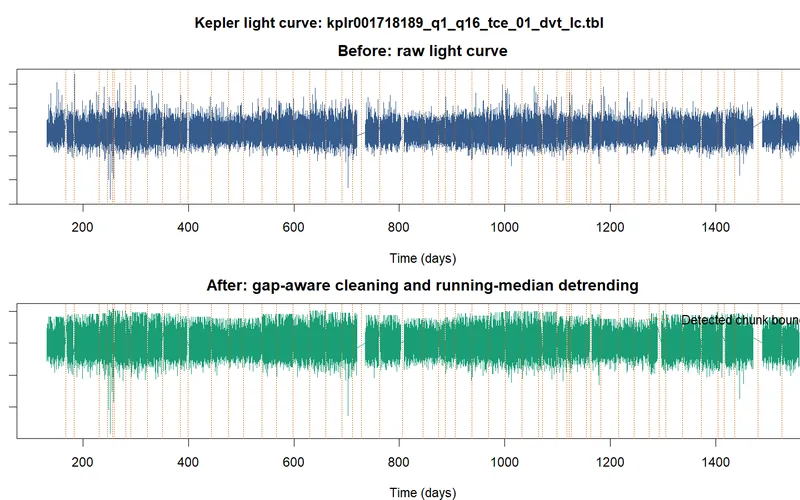
Unsupervised Exoplanet Detection - from an Autoencoder to a Human-in-the-Loop Pipeline
An exoplanet anomaly detector rebuilt around the data: gap-aware preprocessing, a convolutional autoencoder, periodicity checks, and a review dashboard whose labels become training data. Still an anomaly detector, not a validated classifier.
-
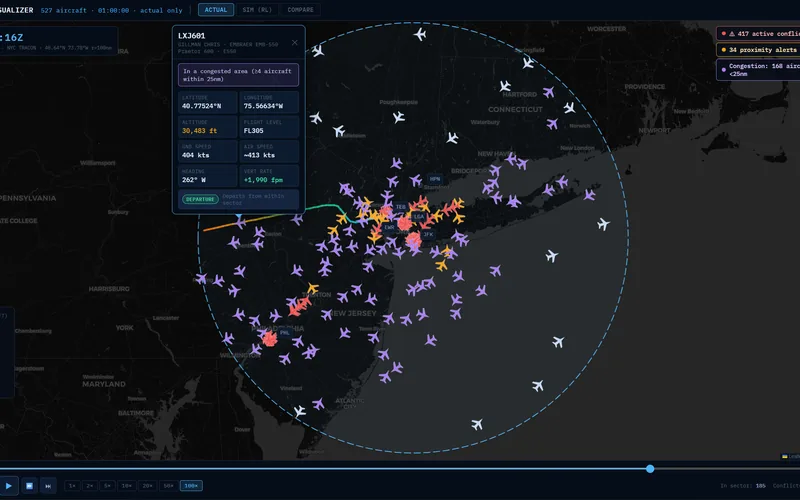
Building an ATC reinforcement-learning agent — going beyond FlightPathAnalysis’s pipeline
A Dueling Double DQN that issues heading, altitude and speed instructions, a simulator to test it, and a radar-style visualizer. Training diverged until rewards were rescaled before the replay buffer.
-
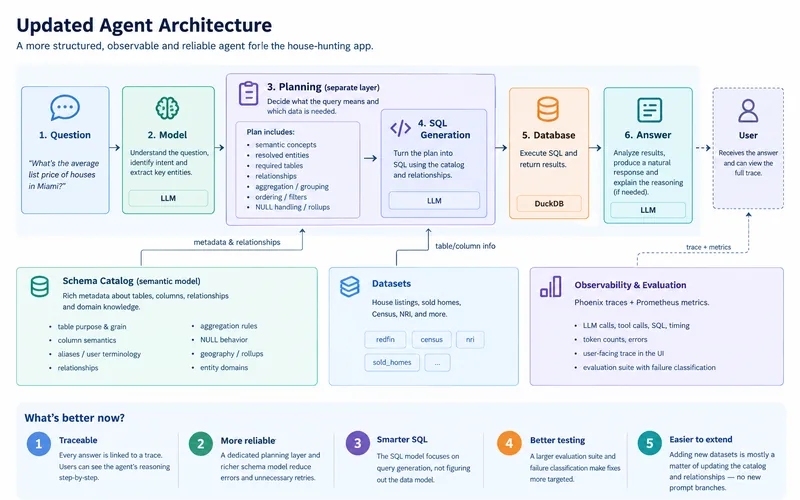
Sharpening the house hunting agent
Traces showed one agent was doing too much. Phoenix tracing, a larger evaluation set, a separate query planner and a richer schema catalog made failures easier to locate and fix.
-
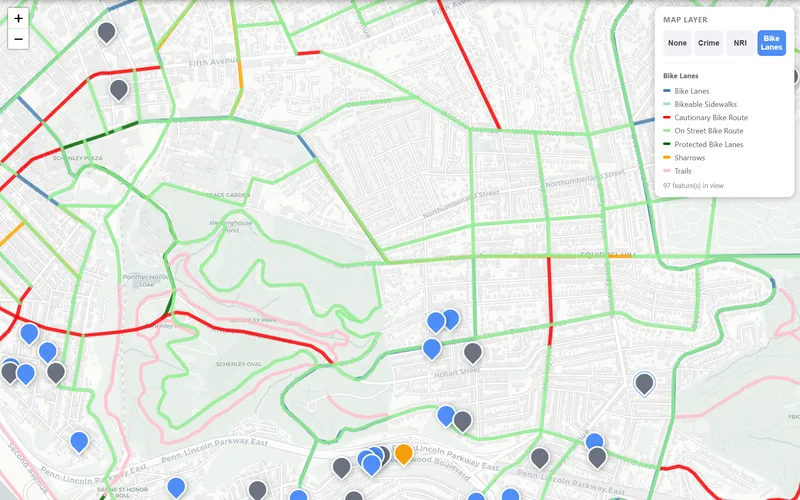
Extending the house-hunting agent - adding datasets without adding code
Crime and bike-lane data went in by describing tables and joins in a catalog, not by writing tools. Routing needed real code, so it got its own tool; a Pittsburgh route that avoids crime hotspots shows the result.
-
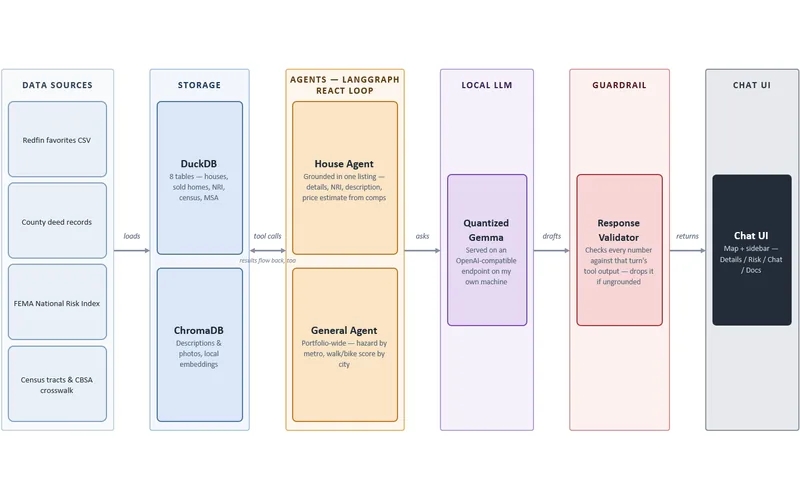
Building a house-hunting agent - going beyond a guided story-driven dashboard
An app for the questions Redfin and Zillow can't answer: two LangGraph agents over DuckDB and ChromaDB, running on a local model. How it's built, and where a small model needed extra scaffolding.
-
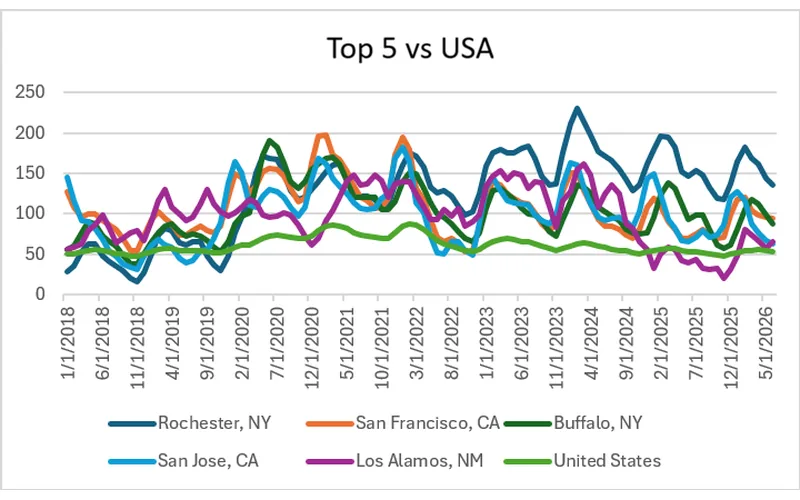
Buying a primary residence - what Redfin, Zillow and Realtor can’t show you
Free datasets on hazards, crime, affordability and market cycles that listing sites don't surface, why fair-housing rules limit what they can say, and a dashboard that layers them over Redfin favorites.
2025
-
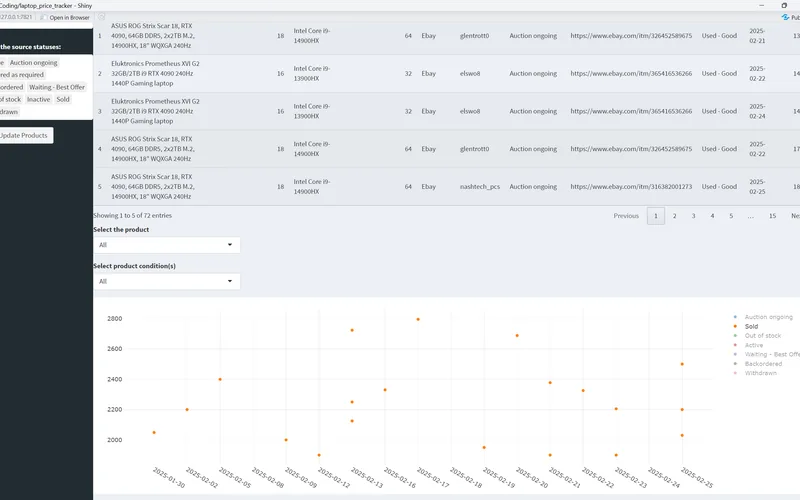
Buying a Laptop with a Dedicated GPU
RTX 4080 and 4090 laptops had no standard price and sold out fast, so I tracked listings in a small database and dashboard. How that data shaped what I bought, and what I paid.
-
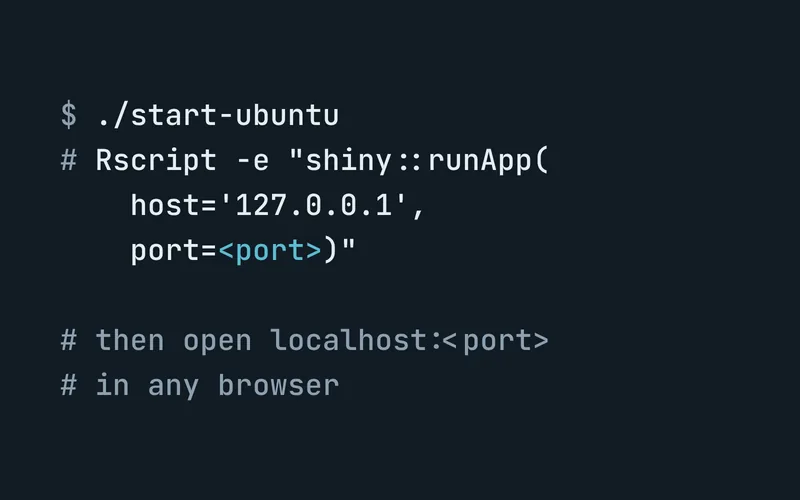
Running Python or R in Android OS
Running R or Python on an Android tablet: Termux from F-Droid, one install route that hit a dead end, one that worked, and how to open a Shiny app in the browser without a windowing system.
2021
-
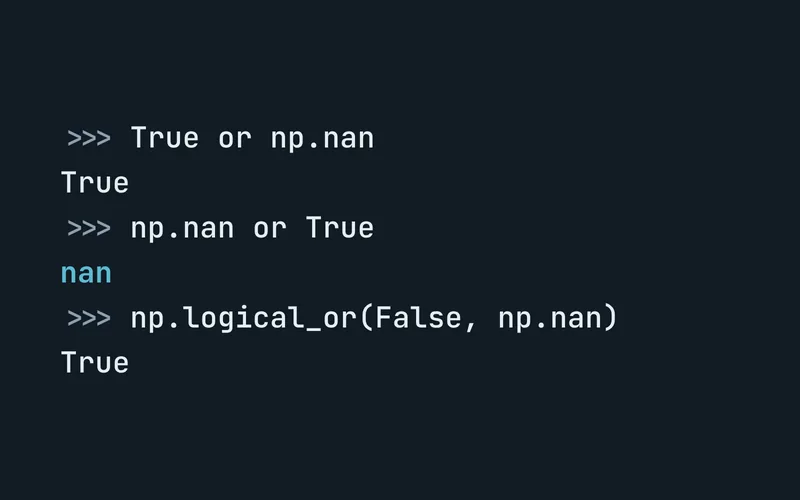
Does python prioritize True in ‘OR’ and False in ‘AND’ condition checks?
Recursive experiments show Python evaluates and/or left to right and stops early. Then NaN enters: np.nan or True gives nan, while np.logical_or(False, np.nan) gives True.
2019
-
Search for Exoplanets - Humans vs. Stars
Volunteer tagging on Zooniverse takes minutes per light curve. The proposal: let an unsupervised model pre-mark candidates so people only confirm or reject them, with credibility scores for taggers.
-
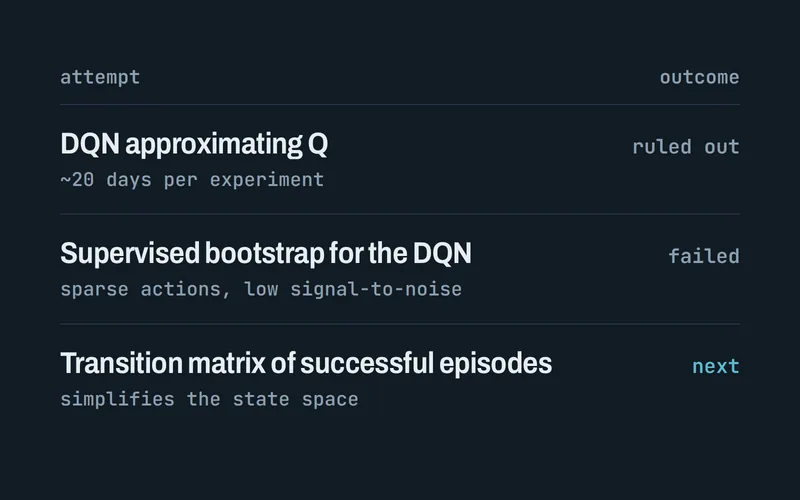
Lessons from my Internship (and Immediate Aftermath)
A confidential reinforcement-learning problem, with the details abstracted away: why DQN experiments took about 20 days each, why supervised bootstrapping failed, and the simpler approach the data suggested.
-
Unsupervised Deep Learning in Astronomy for Exoplanet Candidate Identification
An LSTM autoencoder learns what a star normally does, so transit-like dips stand out without labels. On 30 Kepler light curves it found candidates, but with many false positives that phase folding reduced.
-
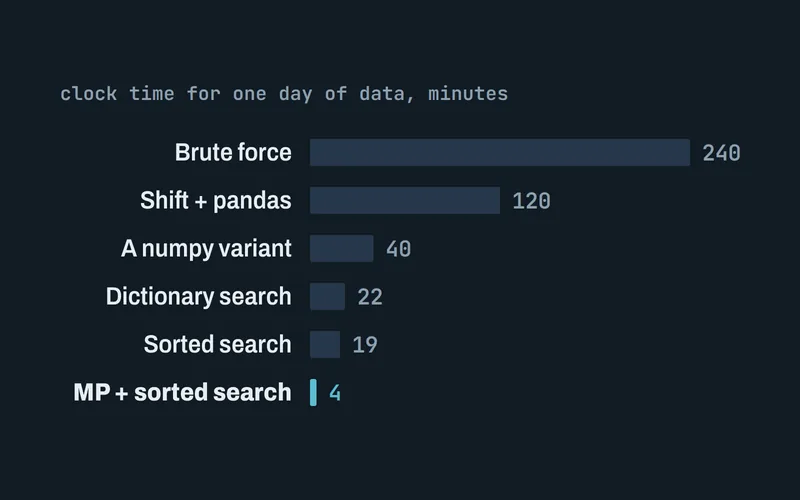
Speeding-up ‘diff’ between Consecutive Rows in Python on My Laptop
Computing consecutive-row differences on 1.3 million rows a day took four hours by brute force. Better search and multiprocessing cut it to four minutes; each step is timed.